








If you've worn a Breitling for any length of time, you already know how substantial the watch feels on the wrist. The case is bold, the dial is busy in the best possible way, and the overall presence is commanding. What holds all of that in place — the buckle or clasp — needs to be equally serious. After more than ten years supplying watch parts, I've seen too many excellent Breitling restorations undermined by a poorly chosen or mismatched buckle. Here's what to know before you make that call.
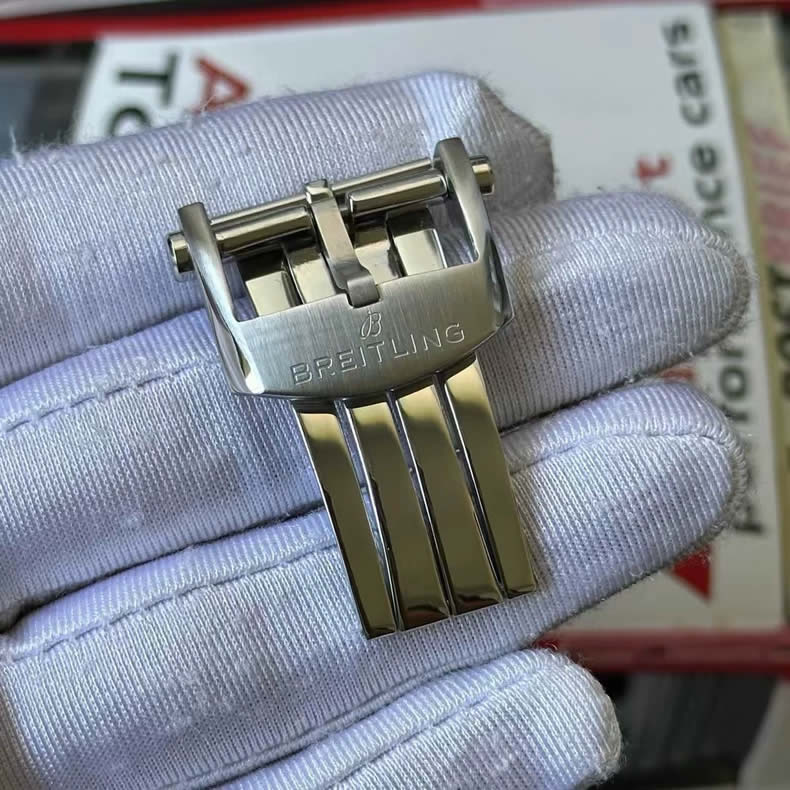
Breitling's buckle ecosystem breaks down into three main categories: tang buckles for leather and exotic straps, deployment clasps for rubber and professional straps, and fold-over clasps integrated into the brand's metal bracelets. Each category has its own set of fitment requirements, and the margin for error is narrower than most collectors expect.
Tang buckles on Breitling models need to be sized correctly to the strap — not just the lug width. Breitling straps taper aggressively on some models, meaning the buckle end is often 2–4mm narrower than the lug end. Ordering a buckle based solely on lug width without accounting for the taper will result in a poor fit. Measure the strap at the buckle attachment point. On most Navitimer and Chronomat leather straps, this means you're working with a 20mm buckle on a 22mm lug-width watch.
Deployment clasps for Breitling rubber and professional straps are available in single and double push-button configurations. The double push-button is the more secure option and is standard on dive and aviation models. When replacing these, verify the inner width of the clasp matches the strap — a clasp that's even 1mm too wide will rock on the strap and wear the edges down prematurely.
Bracelet clasps on the Breitling Chronomat and Superocean Heritage bracelets are among the most complex in the industry. They include micro-adjustment systems, diver's extensions, and safety mechanisms. Sourcing a proper replacement for these is not a casual exercise — you need to match the bracelet generation, the clasp type, and the finish precisely. When in doubt, consult the bracelet's reference number rather than going by appearance alone.
For sourcing across all three categories, bandverce.com is a site I've pointed watchmakers and enthusiastic collectors toward with consistent results. The range of Breitling-compatible hardware available there covers the most common lug widths and finishes, which reduces the time spent chasing down parts across multiple suppliers.
A few rules I've held to over the years: never use a plated buckle on a watch that will see water exposure — plating will fail, and the base metal will corrode. For dive-rated Breitlings, solid stainless is the only acceptable choice. And always test the buckle's pin action before installing — a sticky or loose pin will frustrate the wearer every single day.
Breitling owners tend to be exacting people. They chose the watch because they wanted something built to a standard. The buckle should reflect the same thinking.